
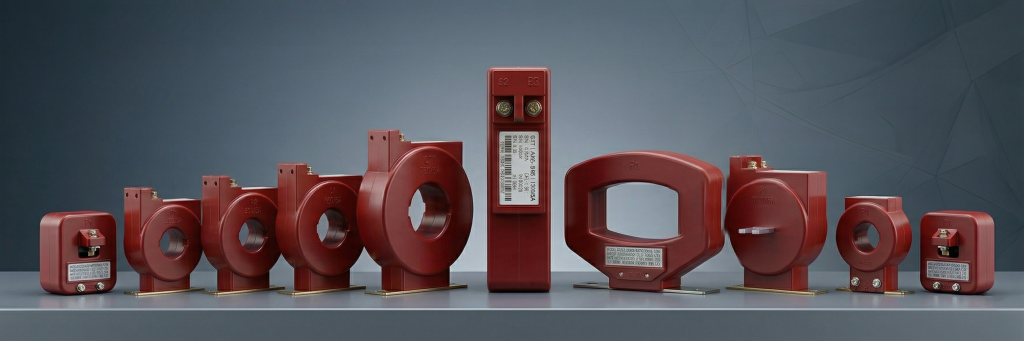
Epoxy Resin Casting and Flame-Retardant Molded Shell Processes: The Ultimate Showdown Against Extreme Industrial Environments
The operating environments of electrical complete sets of equipment vary greatly. From temperature- and humidity-controlled cleanrooms to heavy chemical plants with high salt spray and high dust levels, the casing and insulation processes directly determine the service life of current transformers. This article will provide an in-depth analysis of the technical differences between epoxy resin vacuum casting and flame-retardant plastic casings, offering you the most direct purchasing guidance.
I. High-Efficiency Application of Flame-Retardant Molded Case Transformers.
Flame-retardant molded case transformers are the “main force” in low-voltage power distribution systems. Their housings are typically injection-molded from high-strength, high-heat-resistant polycarbonate or ABS flame-retardant materials.
Technical Advantages: Extremely lightweight, compact structure, and highly standardized dimensions. The molded housing design facilitates diverse installation methods, such as base plate screw fixing, DIN rail clip mounting, and direct suspension to busbars.
Applications: It is the most cost-effective solution for standard indoor switchgear, low-voltage electrical panels, and conventional automation control systems. Its clean and uncluttered industrial aesthetic design maintains a professional appearance even in environments with dense wiring.
II. The Ultimate Protection of Epoxy Resin Casting Process.
When environments become harsh, resin-cast current transformers demonstrate their irreplaceable robust strength. This process involves placing the secondary coil, magnetic core, and some lead terminals in a mold, injecting liquid epoxy resin under vacuum, and then curing it at high temperature to form an indestructible insulating whole.
Insulation and Moisture Resistance: The monolithic casting process completely eliminates internal air gaps, preventing moisture, dust, and corrosive gases from entering the internal windings. Even in coastal facilities or underground utility tunnels with extremely high humidity, partial discharge and insulation breakdown are completely avoided.
Mechanical Strength and Vibration Resistance: The cured resin endows the transformer with extremely high mechanical strength, enabling it to withstand the intense high-frequency vibrations generated during the starting of large motors or the operation of frequency converters (VFDs).
III. The Necessity of Choosing a Source Manufacturer
The market is flooded with OEM products of varying quality. Finding a genuine Current Transformer Manufacturer means you can directly control quality and delivery time. JSELE Electric has a complete in-house mold development and resin casting production line. We provide pure industrial-grade components, eliminating all unnecessary markups, and solve all your problems from drawing confirmation to mass production delivery through the most efficient communication channels.